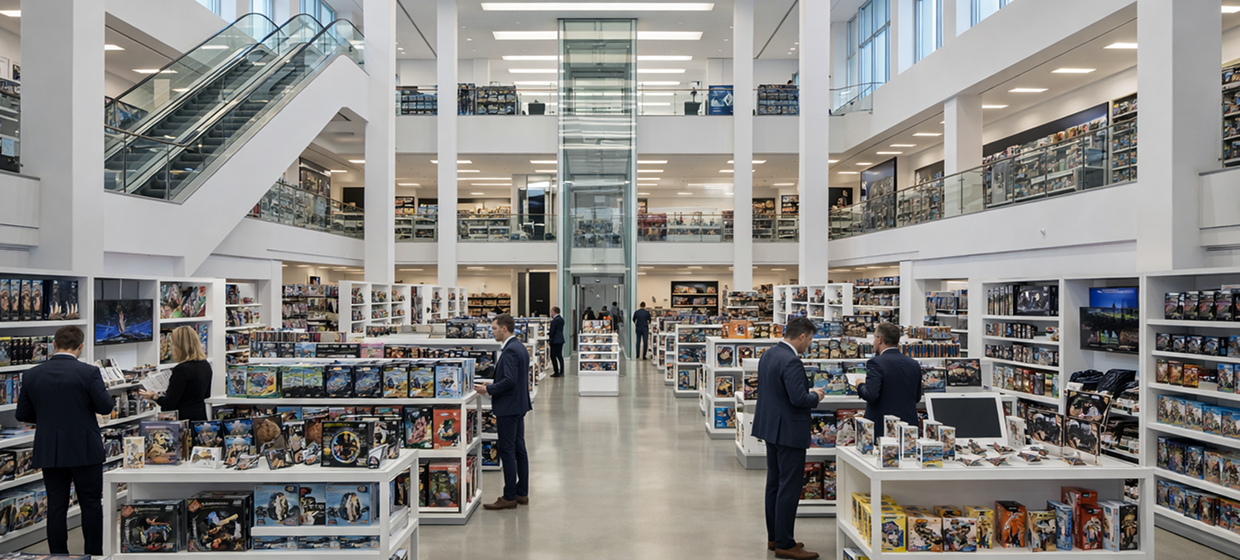
For years, toy buyers worked through a sourcing chain that quietlygrew longer every season. Agents, regional traders and local representativesadded layers of convenience — and layers of cost. Today, that chain is breakingdown.The traditional sourcing model is shifting, and this shift is redefining what effective and sustainable sourcing looks like.
The traditional sourcing chain
Traditional toy sourcing rarely starts at the factory. Most buyers work with an agent whoworks with a trading company that works with a sales office — and the factory sits behindall of it. The further a buyer is from the factory floor, the less they see: pricing is bundled,quality control is outsourced, and lead times are explained rather than shown.It is a model built on trust, not on transparency. That worked well enough in a slowermarket. In today's conditions — rising costs, faster trend cycles, tighter regulation — it nolonger does.
Why direct access matters
Direct factory access is not only about price, though price is the most visible change. It isabout knowing what is being made, how it is being made, and what happens if somethinggoes wrong.Buyers working directly with manufacturers see their production timelines, their QCreports and their product specifications without filter. That visibility is where realsourcing control begins — and where margin protection starts.
Every link in the sourcing chain is a point where cost, time or control is quietly lost.
What direct access actually looks like
In practice, direct sourcing is not a single action — it is a set of habits. Buyers who workdirectly with factories tend to share a few working patterns:
They walk the production floor, not just the sample room
They negotiate on the actual factory price, not the blended rate
They set MOQs by carton when the product allows
They track production, not just shipment
None of this is radical. It is simply how sourcing worked before long intermediary chains
became the default.

The shift ahead
For buyers used to the old model, direct sourcing can look like extra work. In practice, itis the opposite. The new source model removes the meetings, the markups and theuncertainty that came with them.Sourcing should not feel uncertain. It should feel like control — from the factory floor in Shantou to every shelf in the market.